Like this article? You’ll love ‘The Bite’.
Our monthly newsletter delivers sharp, practical branding advice — minus the fluff.
- Real examples
- Useful ideas
- Straight talk
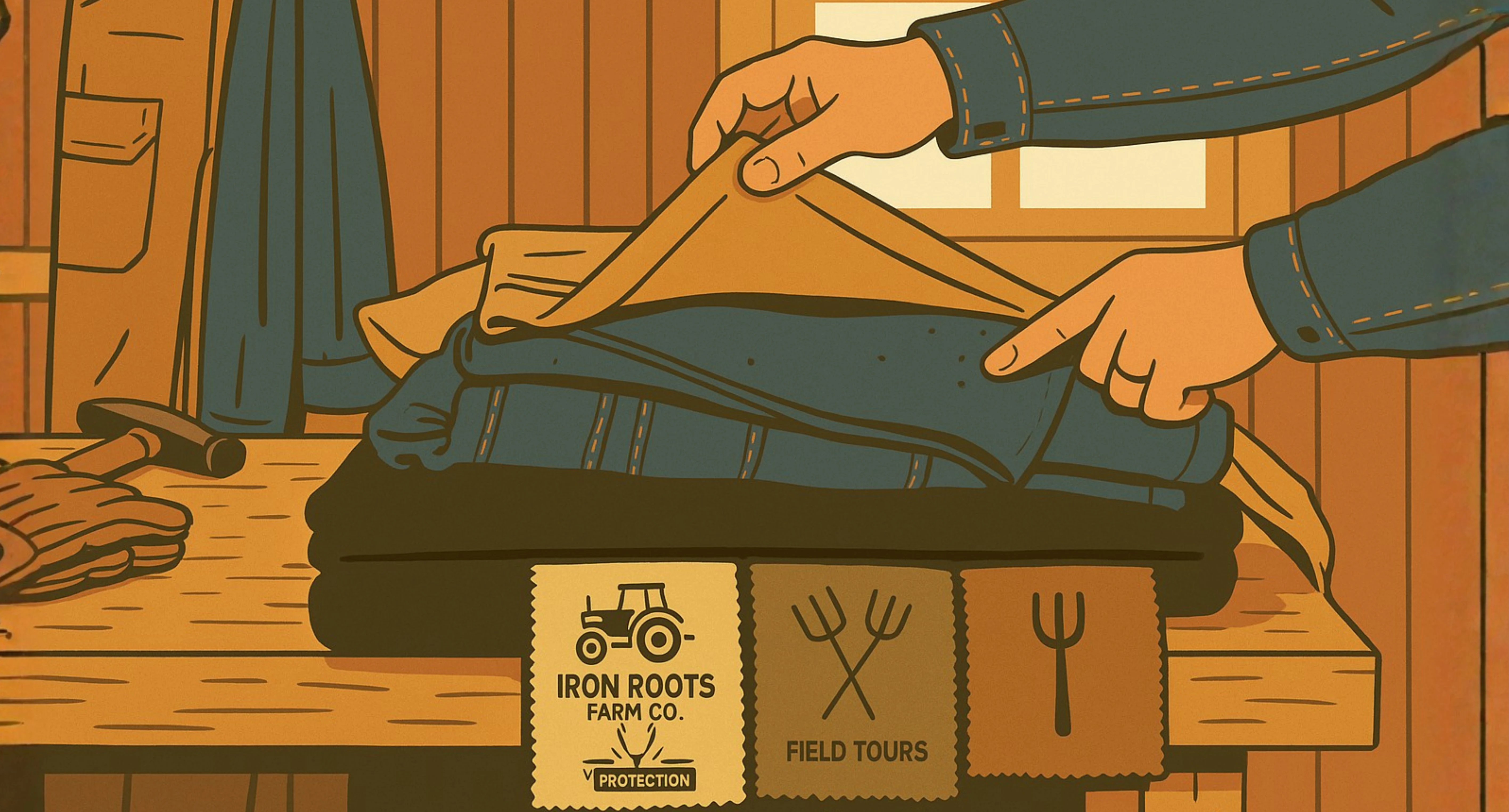
Working in rural environments — whether you’re handling livestock, operating heavy machinery, or supplying farm gear — means dealing with dirt, weather, wear-and-tear and long hours under the sun. Workwear isn’t just clothing: it’s a frontline defence for your team. The right fabric can mean the difference between clothes that survive a season and clothes that fall apart before the harvest.
For agri-businesses, that’s why choosing fabrics that combine ruggedness with comfort — while still allowing for branding or custom logos — is essential.
When evaluating fabrics for farm workwear, the following qualities are most important:
Below, we unpack the most effective fabric options for rural/agricultural workwear, with what they deliver — and when they’re most suitable.
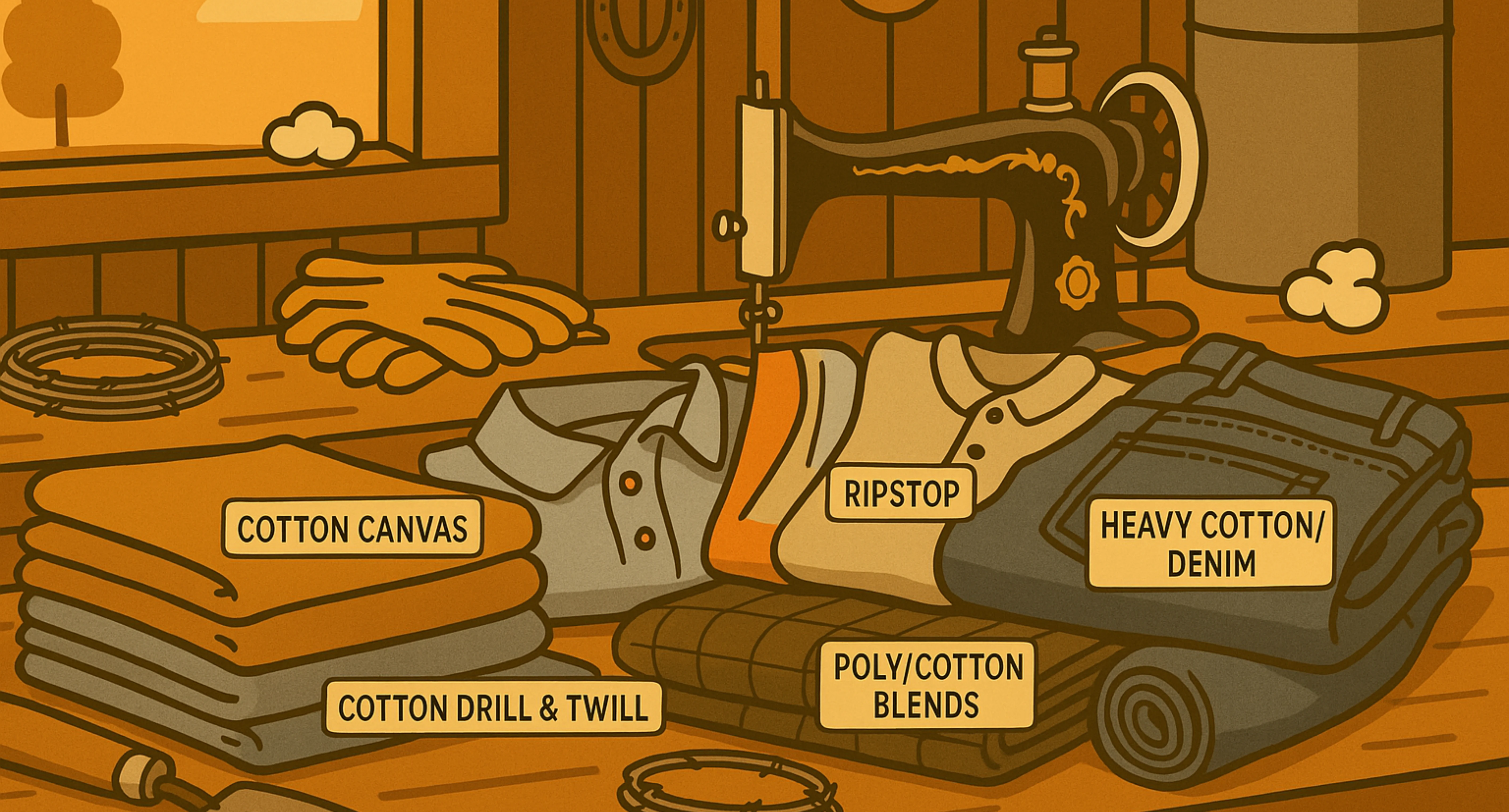
Canvas — particularly cotton canvas or heavier “duck” canvas — is among the toughest natural fabrics for workwear. Its tight, heavy weave gives excellent resistance to abrasion, punctures and repeated wear.
Despite its strength, cotton canvas remains breathable and more temperature-regulated than many synthetics, which helps for long days in fields or under the sun.
Canvas works especially well for pants, overalls, jackets — ideal for livestock operations, machinery work and rough farm tasks.
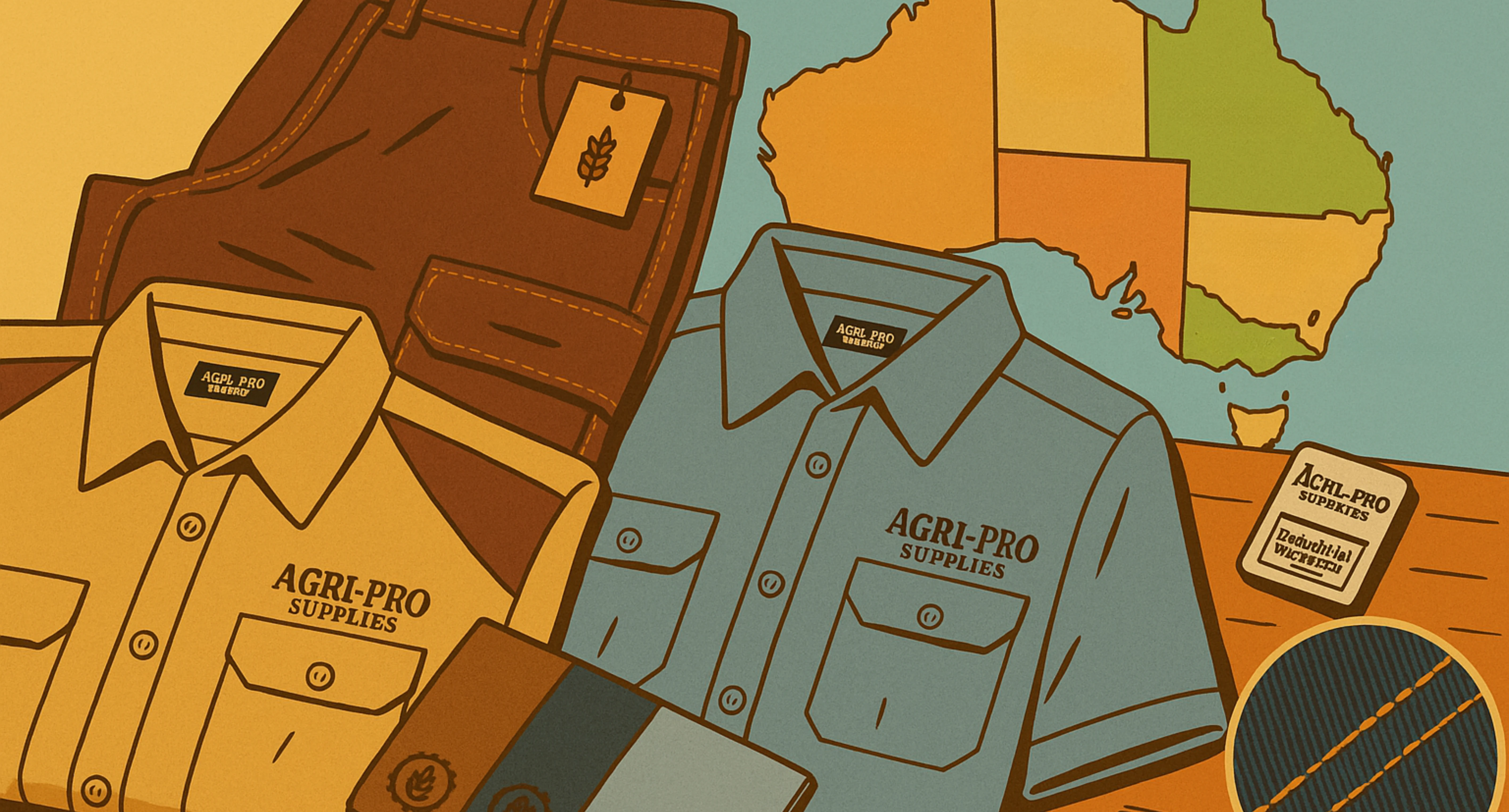
It also takes patches, embroidery, or logo branding well — which is perfect if you supply branded uniforms or want your farm name visible.
Cotton drill (or twill weaves) offers a balance: stronger than light cotton, but lighter and more flexible than heavy canvas.
Twill’s diagonal weave gives good wear resistance, while being easier to move in — especially useful for lighter tasks, inside sheds, or roles needing more mobility.
Great choice for shirts, light trousers, work tops — where comfort, breathability and moderate durability are priorities.
Ripstop fabric is woven with reinforcing threads at intervals to form a grid — this prevents small tears from becoming big rips, which is a big advantage on farms with sharp edges, wire fences, machinery, or thorny vegetation.
Many modern ripstop fabrics combine cotton with polyester (or other synthetics), giving good durability, easier maintenance and better resistance to moisture or staining — while retaining a reasonable degree of breathability.
Ripstop is ideal when you need lighter garments than canvas but still want toughness — good for field shirts, lighter pants, or seasonal wear.
Poly-cotton blends bring together cotton’s breathability with polyester’s durability, wrinkle resistance and easier maintenance (less shrinkage or fading after washes).
For hot climates or humid conditions, blends may offer advantages: quick-drying fabrics, better colour retention, lower maintenance and decent comfort.
They’re often used for lighter workwear items: shirts, polos, hi-vis gear, or undershirts.
Traditional denim (or heavy cotton twill) remains a solid choice for heavy-duty farm pants or overalls. The tight weave and thick cotton threads give resistance to abrasion, tearing and rough surfaces.
Denim’s hard-wearing nature makes it suitable for tasks involving kneeling, tool use, or repeated friction — common in livestock handling or machinery work.
| Use / Role | Recommended Fabric(s) | Why It Works |
|---|---|---|
| Heavy-duty farm work | Cotton Canvas / Duck Canvas, Heavy Denim | Maximum abrasion and puncture resistance; handles physical stress. |
| Everyday field tasks | Cotton Drill / Twill, Ripstop, Poly-cotton blends | Balanced durability, comfort and breathability. |
| Hot climates / summer work | Ripstop blends, Poly-cotton blends, Lightweight drill | Quick drying and reduced heat stress. |
| Branded uniforms | Canvas, Drill, Ripstop | Excellent embroidery and logo durability. |
| Mixed workloads | Ripstop, Mid-weight canvas, Poly-cotton blends | Versatility across tasks and environments. |
For agri-businesses, there’s no one-size-fits-all solution. But a thoughtful mix based on role, climate and work type delivers gear that stands up to mud, sweat and logos — while remaining comfortable, functional and brand-ready.
This is our last post for the year, so on behalf of all the staff at Mad Dog Promotions, have a very Merry Christmas and a very happy and prosperous new year.
Mad Dog Marketing
Branding With Bite
Like this article? You’ll love ‘The Bite’.
Our monthly newsletter delivers sharp, practical branding advice — minus the fluff.